Under the Umbrella — Mwanaidi's Four-Product Business and the Son She's Teaching to Run It

There is a detail in Mwanaidi's story that does not show up in any profit figure, any repayment record, or any impact dashboard. But it might be the most significant thing she is building.
During school holidays, her son works beside her at the stall. She mentors him, showing him how to arrange stock, manage customers, and track what sells and what doesn't. She is, without ceremony or fanfare, transferring the knowledge that took her years to accumulate. Not to a classroom. To her son. In real time.
Mwanaidi operates from a roadside stall protected by an umbrella. It is wearing out. When the rains come, she cannot trade - her products are exposed, her customers stay away, and the income that her family depends on simply stops. It is the kind of constraint that erodes not just revenue, but resilience.
And yet, within that constraint, she has built something genuinely impressive.
Her original business was fish. A reliable product, a loyal local customer base, the kind of steady trade that sustains but rarely grows. Then she received her microloan through SheEO in partnership with Redonate Foundation, and she used it with precision.
She introduced sukuma wiki. Then tomatoes. Two new products that complemented the fish, extended her appeal to a broader customer base, and created new income streams that don't depend on the same buyer showing up for the same thing every day.
"The loan helped me introduce new products to complement my fish business," she told our team. "This is new additional income and a new client base."
She also sells water. And she is already watching the price signals - water costs have risen, and she knows that bulk purchasing is the smarter move. She is not waiting for someone to tell her the economics. She has already worked them out. She just needs the capital to act on them.
From one product to four. From one customer type to many. From a single income stream to a diversified, weather-dependent but commercially active small enterprise.
The weather dependence is the next problem to solve - and Mwanaidi has already named the solution: a permanent store. Four walls. A roof that holds against a Nairobi downpour. A base from which she can trade every day, regardless of what the sky decides to do.
That is her target for the second loan cycle. And based on what she has done with the first - the diversification, the new customers, the daily operations, the mentoring of her son - the case for backing that next step is clear.
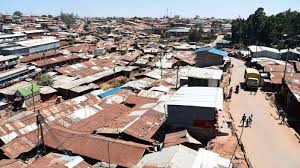
Because here is what strikes us most when we think about Mwanaidi's story: she is not building for herself alone. Every school holiday, she is transferring what she knows to the next generation. Not as a formal lesson. As a lived apprenticeship. Her son is learning that a business requires daily presence, product judgment, customer relationships, and the willingness to adapt. He is learning it by doing it, beside his mother, at a roadside stall in Kibera.
That umbrella may be wearing out. But what she is building beneath it will outlast it by decades.
A permanent store is the next step. Mwanaidi is ready for it. The only question is whether the capital arrives in time for her to build it before the weather takes another season from her.
.png)
.jpeg)
.png)
Comments
Post a Comment