From Employee to Owner — Violet's 25-Year Bet on Herself

There is a particular kind of decision that changes everything. Not a reckless leap—a calculated one. The kind made by someone who has studied the situation from every angle and arrived at a conclusion that feels both obvious and terrifying.
Violet made that decision 25 years ago.
She was working in a hotel—serving customers, watching the kitchen, and understanding the rhythms of the food business from the inside. And somewhere in the middle of that daily routine, something shifted. She looked at the operation around her and thought, I should be running one of these.
So she did.
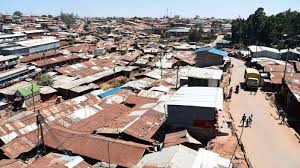
Today, Violet's cafeteria in Kibera serves ugali, omena, matumbo, rice, and sukuma wiki to a loyal and growing customer base. Traffic is high. She takes delivery orders. She has regulars. She has built, over a quarter of a century, exactly the kind of business she envisioned when she was still someone else's employee.
But there was a ceiling she couldn't break through alone.
Like most informal food business owners, Violet was buying stock in small quantities—daily purchases that kept the kitchen running but eroded her margins. She knew the answer: buy in bulk, reduce unit cost, increase profit. She had the knowledge. She didn't have the upfront capital.
Her microloan through SheEO in partnership with the Redonate Foundation gave her that capital.
She bought flour in bulk.
Her daily profit moved from KES 500 to KES 700 — and often more. A 40% increase in daily earnings from a single supply chain decision she had already identified as the right move. The loan didn't give her the idea. It gave her the ability to execute it.
She tracks every shilling. Daily records of expenses and revenue sit in her record book — a practice she maintains with the discipline of someone who understands that a business you can't measure is a business you can't grow.
The impact stretched beyond the profit column.
"The loan has helped me cater for my daughter's medical bills and afford her medication more easily," Violet told us. "It has also helped me to buy food in the house more easily and cater for my children's needs."
This is the dimension of microfinance that doesn't always make it into the financial models: the stability a growing business creates in the home. A medical bill that would once have pulled money from the working capital and destabilized the whole operation now gets absorbed. Not easily, but without catastrophe.
When our team visited, we found a cafeteria that was operationally strong and commercially busy — and physically too small for the demand it was already meeting. The space is squeezed. The potential is not.
Violet knows what she wants next: a bigger hotel. More tables. More customers. More stock bought in bulk with a larger capital base. She is not asking to start over — she is asking to expand what she has already built and proved.
Twenty-five years ago, she made a calculated decision to bet on herself.
It paid off. Now it's time to back the next phase of that bet.
.png)
.jpeg)
.png)
Comments
Post a Comment