KES 20 to KES 2,000 a Day — Beatrice's 30-Year Journey to Capital

Some stories of entrepreneurship begin in a boardroom, with a pitch deck and a plan. Beatrice's story began with KES 20 and a bunch of vegetables.
That was thirty years ago. She bought the vegetables, sold them, and walked home with KES 40. The next day she reinvested. She made KES 80. The logic was simple, and it worked: buy, sell, grow. She never stopped.
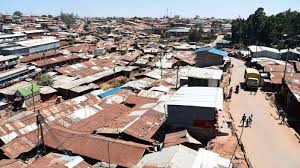
For three decades, Beatrice has operated from her stall in Kibera, selling vegetables and grilled fish to a customer base that stretches beyond her immediate neighborhood—regulars come from Kibera, Ngong Road, and Langata, drawn by the reliability of what she offers. She knows her market. She knows her customers. What she didn't have was the capital to match her knowledge.
The problem wasn't ambition. It was stock.
On days when she couldn't afford to restock, the kibanda stayed shut. A closed stall earns nothing. Worse, it trains customers to stop expecting you to be there. Inconsistency is invisible erosion - slow, steady, and hard to recover from.
"Before, I would open a few days when I had the stock," Beatrice told our team. "Now I have fully restocked, and I'm in business every day."
Every day. After thirty years of going as far as her capital would take her, Beatrice is finally open every single day.
Since receiving her microloan through the SheEO x Redonate Foundation microloan program, the numbers have followed. She now makes approximately KES 2,000 per day—income that was, in her own words, not possible before.
"This raises my morale," she said simply. In those four words is everything: the dignity that comes from a business that works, that provides, that shows up.
During our most recent field visit, our team reviewed her operations and identified the next lever for growth: her jiko. The small stove she currently uses limits her fish grilling capacity—longer cooking times, lower volume, fewer customers served. A larger, energy-efficient jiko would change that equation. More fish. Faster. At a lower fuel cost. It is her priority for the next capital cycle.
We also encouraged her to open earlier and extend her coverage area—more ground covered means more customers reached, particularly the morning trade that sets the tone for the whole day. Tomatoes, onions, expanded produce: she already knows what a fuller stall looks like.
"Because of the support I got from SheEO, I feel more confident to run my business and provide better for my family," she told us.
Confidence, in the context of a thirty-year business, is not a soft outcome. It is a commercial one. A confident business owner prices correctly, stocks strategically, and shows up consistently. Beatrice already had the instinct. Now she has the backing.
Her story is worth pausing on—not because it is exceptional, but because it is representative. Across Kibera, across Nairobi, across this continent, there are women like Beatrice who have been building for decades with almost nothing. Not because they lack capability. Because the system was not built to reach them.
SheEO is building that reach.
Beatrice started with KES 20. Thirty years later, she is making KES 2,000 a day. Imagine what the next thirty look like—with capital, with coaching, with a system that finally sees her.
.png)
.jpeg)
.png)
Comments
Post a Comment