
The 90% Reality: Why We Are Engineering Capital for Africa’s Real Economy
The global economy in 2026 is caught in a tug-of-war. While the International Monetary Fund recently upgraded Sub-Saharan Africa’s growth forecast to a promising 4.6%, the fiscal reality for many governments is paralyzing. Across the region, sovereign debt servicing now absorbs more than 40% of government revenues, severely choking public investment and formal sector expansion.
Institutional capital is staring at sovereign balance sheets and seeing risk. But they are looking in the wrong place.
While formal markets hesitate, the true economic engine of the continent is roaring in plain sight. In Kenya, recent data reveals a staggering truth: 90% of all new jobs created are now generated by the informal economy, which houses over 83% of the nation's workforce.
The informal sector is no longer the fringe of the African economy. It is the economy. Yet, despite being the undisputed backbone of job creation, women-led micro-enterprises across the continent remain starved of growth capital, facing an annual financing gap exceeding $42 billion.
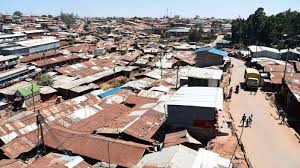
The Micro-Reality: Surviving the Chaos in Kibera
Macroeconomic statistics tell you what is happening, but you have to zoom into the micro-economy of places like Kibera to understand why traditional finance is failing to capture this $42 billion opportunity.
In Kibera, women do not run "side hustles." They run highly sophisticated, multi-product enterprises in high-frequency, chaotic environments. A woman might sell fresh produce in the morning, pivot to dry goods in the afternoon, and manage a mobile money agency by evening.
These women are incredibly resilient. Recently, when mid-program government demolitions swept through Kibera—destroying stalls and displacing thousands of vendors—the traditional banking sector would have categorized these businesses as "total defaults." But what did the women in SheEO's program do?
They didn't panic. Because they had built solid business foundations and managed their inventory through our Money Journal system, they simply executed their stock plans and set up their businesses on the rubble the very next day.
They don't lack intelligence, work ethic, or resilience. They lack the financial infrastructure to prove it.
The SheEO Solution: From "Risky" to "Ready"
The traditional development sector has failed these women through two broken models: NGOs offer financial literacy without capital (funding hope), and Microfinance Institutions offer capital without behavioral training (creating debt).
At SheEO Foundation, we act as the governance layer that translates the raw, dynamic energy of the informal market into the stable, de-risked signals that capital requires.
We do not deploy capital based on attendance certificates. We gatekeep our lending behind a proprietary 24-point Capital Readiness Scorecard. Before a woman accesses our revolving fund, she must prove her cash discipline, business viability, and group accountability. We solve the doing problem, not just the knowing problem.
The Alchemy of Compounding Capital
When you inject capital into an unready business, the money vanishes. But when you deploy capital into a rigorously prepared micro-enterprise, the financial physics change completely.
Because we demand readiness, our borrowers utilize 100% of their capital within 30 days and achieve average income increases of 40%. More importantly, this discipline unlocks the holy grail of social impact: Compounding Capital.
We do not treat our funding as a sunk cost or a one-time grant. We operate a high-velocity revolving fund. When a SheEO entrepreneur repays her loan, that exact same capital is immediately redeployed to the next capital-ready woman in the queue. A single dollar invested in our fund doesn't just change one life; it revolves to fund two to three entirely different cohorts within a single year.
The impact of that initial investment compounds infinitely, growing businesses, creating local jobs, and keeping children in school long after the first check was written.
It is time to stop viewing the African micro-entrepreneur as a risk to be mitigated. With the right infrastructure, she is the most resilient, high-yield asset class of 2026.
Stop funding the noise. Start funding the infrastructure.
.png)
.jpeg)
.png)
Powerful reflection, Lindah Lucy.
ReplyDeleteFrom experience working with SMEs in marginalized communities, the issue isn’t risk. It’s lack of the right financial infrastructure. When entrepreneurs build discipline and systems, their resilience and capital utilization become clear.
Capital readiness is the game changer. That’s how we move from one-off funding to truly scalable, compounding impact.